Helical Piers for New Construction in Raleigh & Eastern NC
Helical piers for new construction in Raleigh and Eastern North Carolina can provide foundation support where surface soils are weak or inconsistent. Atlantic Foundation & Crawl Space Repair uses the Stabilizor® helical pier system to transfer structural loads to more stable soil conditions and help reduce the risk of future foundation settlement and cracking.
When Helical Piers Are Considered for New Construction
Helical piers may be considered when near-surface soils are weak, inconsistent, expansive, or otherwise unsuitable for the planned foundation loads. The decision should be based on site and soil conditions, structural loads, and the foundation design—not simply on the presence of one soil type.
Related new-construction guides: foundation cracks in new construction, new-construction foundation problems, and helical pier installation.
How the New Construction Pier Process Works
The process begins before the foundation is poured. Pier locations, lengths, and installation requirements are coordinated with the project conditions and load requirements.
- Site Assessment and Pier Placement
Site and soil information, foundation layout, and structural loads are reviewed to determine where piers may be required and the installation criteria for the project.
- Helical Pier Installation
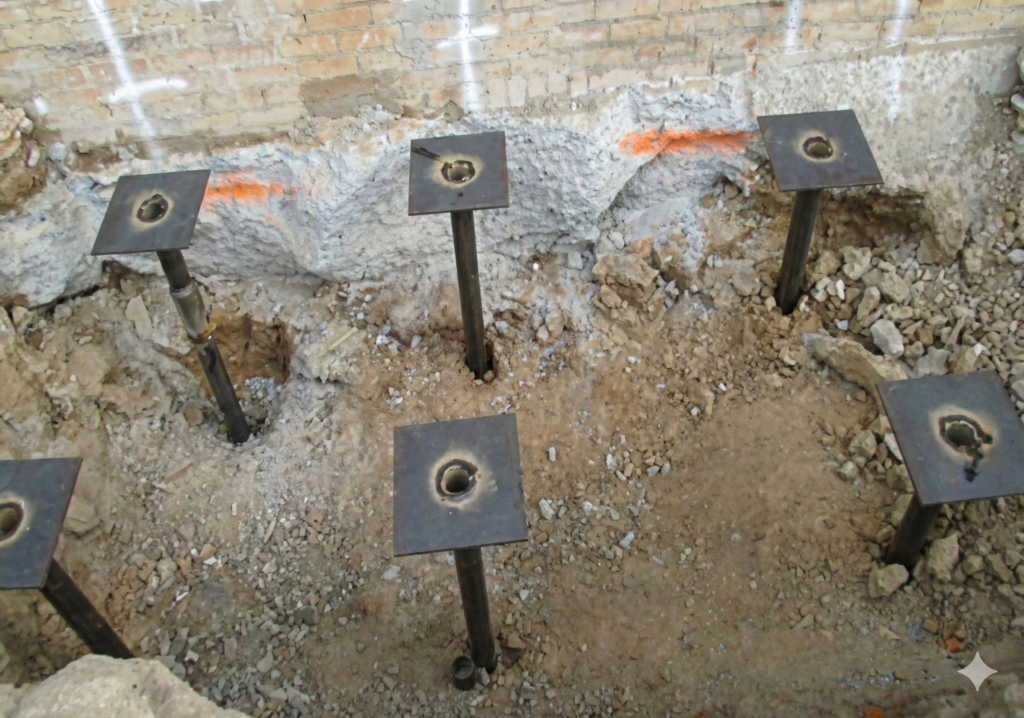
Helical piers are installed at the planned locations and advanced until the installation criteria for the project are achieved.
- Capping and Foundation Pouring
After installation, the pier connections are integrated with the footing or foundation system according to the project design before concrete placement is completed.
- Load Transfer for Long-Term Stability
The completed foundation can then transfer designated loads through the piers to more competent soil. This approach is intended to reduce settlement risk where weak surface soils would otherwise limit support.
Site Conditions That Can Lead to a Helical-Pier Recommendation
Helical piers are not automatically required for every new build. They are considered when the site, soil, foundation design, or inspection findings indicate that additional deep support is appropriate.
Unstable or Poor Soil Conditions
Weak, loose, organic, or poorly compacted near-surface soils may not provide adequate support for the planned foundation loads.
Expansive Soil or Mixed Soil Types
Mixed or expansive soil conditions can create variable support and may justify a deeper foundation-support strategy depending on the project.
Unsuitable Soil Found During Foundation Work
If excavation or inspection identifies unsuitable support conditions, the project team may consider helical piers or another engineered foundation solution.
Request a Project Consultation
Share the project location, foundation type, and any available soil or structural information so the team can review whether helical support may be appropriate.
Are you buying or selling a home? Do you have humidity or foundation concerns?
Atlantic Foundation & Crawlspace Repair provides comprehensive crawlspace and foundation inspections. A $400 retainer is required for the estimate, which is fully deducted from your final invoice once the proposal is accepted.
What Determines the Helical-Pier Design
The pier design should follow the conditions and requirements of the project. Soil information, structural loads, foundation layout, access, and installation criteria all affect the final pier plan.
Foundation Loads
Pier spacing and support requirements depend on the loads that must be transferred through the foundation.
Soil Conditions
The depth and consistency of competent soil influence pier length and installation requirements. Helical support can reduce settlement risk but cannot eliminate every possible source of future movement.
Construction Sequence
Pier installation is coordinated with excavation, footing preparation, reinforcement, and concrete placement so the support system integrates with the foundation.
Engineering & Project Coordination
Builders, engineers, inspectors, and the pier installer may need to coordinate details so the foundation-support plan matches the project requirements.
Planning Helical Piers for a New Build
If weak or inconsistent soil is affecting a new construction project, call 919-855-0855 or request a consultation. The appropriate foundation-support solution depends on the site conditions, structural loads, and project design.