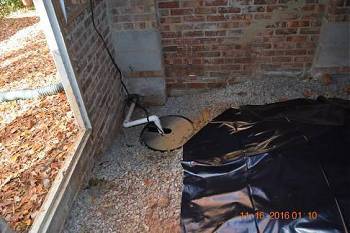
Crawl space drainage in Raleigh, NC helps manage standing water and recurring moisture beneath the home.
Atlantic Foundation & Crawl Space Repair evaluates water-entry and drainage conditions and recommends solutions such as French drains, sump pumps, grading, or related moisture-control measures based on the property.
Crawl space drainage is most effective when the source of the water is identified first. Water may enter from surface runoff, poor grading, groundwater, plumbing leaks, or repeated rain events. Humidity and HVAC condensation are different moisture problems and may need a different solution.
Signs a Drainage Evaluation May Be Needed
Standing water and repeated water entry point to a different problem than high humidity alone. A drainage evaluation should determine whether liquid water is entering, where it is coming from, and where it can be discharged safely.
Standing Water
Visible water pooling in your crawl space indicates poor drainage.
Musty Odors
If your home smells damp or musty, moisture in the crawl space may be the cause.
Warped or Cupped Floors
When moisture seeps into the flooring above your crawl space, it can cause wood floors to warp, cup, or buckle.
Visible Moisture-Related Growth
Persistent dampness can create conditions where biological growth appears. The water source should be addressed rather than treating the visible symptom alone.
Condensation on Ductwork or HVAC Equipment
If you notice condensation on your air ducts or HVAC system in the crawl space, it’s a sign of high humidity.
Request an Evaluation
Tell us where and when water appears in the crawl space so the team can review the likely source and the next steps.
Are you buying or selling a home? Do you have humidity or foundation concerns?
Atlantic Foundation & Crawlspace Repair provides comprehensive crawlspace and foundation inspections. A $400 retainer is required for the estimate, which is fully deducted from your final invoice once the proposal is accepted.
How We Match the Drainage Solution to the Water Source
No single drainage system is right for every crawl space. The recommendation depends on where water enters, where it collects, the crawl-space grade, available discharge points, and whether humidity or vapor control is also needed.
French Drain Installation
A French drain can collect recurring water along a crawl-space perimeter or low area and direct it toward a discharge point or sump. It is selected when the water-entry pattern supports that approach.
Re-Grading Crawl Space Floors
Re-grading can help where low spots or uneven soil allow water to collect. It may not solve groundwater or water entering from outside the foundation by itself.
Sump Pump Installation
A sump pump removes water that has already been collected by the drainage system. It works best as part of a defined collection and discharge plan.
Crawl Space Encapsulation
Encapsulation controls ground vapor and humid-air entry. It can complement drainage, but it should not replace a drainage solution when standing water is present.
Moisture Barriers
A vapor barrier reduces ground moisture entering as vapor. It does not remove liquid water that is already entering or pooling in the crawl space.
What a Crawl Space Drainage Evaluation Should Determine
A useful drainage evaluation should identify the water source, the lowest collection areas, the available discharge route, and whether the problem is liquid water, humidity, or both. Those answers determine whether the home needs drainage, a sump pump, grading changes, encapsulation, or a combination.
Where Is the Water Entering?
Look for runoff, groundwater, plumbing leaks, grading issues, or other entry points before selecting a system.
Is It Liquid Water or Humidity?
Standing water points toward drainage; persistent humidity may require broader crawl space repair or encapsulation measures.
Does the Home Need One System or a Combination?
Some crawl spaces need drainage plus a sump pump, while others also need encapsulation or structural repair after the water problem is controlled.
Get Started Today
If water is collecting in your crawl space, call 919-855-0855 or request an evaluation. The correct solution depends on where the water is entering and how it can be collected and discharged.
When the ground outside your home is higher than your crawl space, water can seep in and cause standing water.
Heavy Rain or Water Intrusion
Water from heavy rains, broken pipes, or poor drainage systems can flood your crawl space.
Clay Soil
Clay-rich soil holds onto moisture and can create a humid environment inside your crawl space, contributing to long-term moisture problems.
What Drainage Can—and Cannot—Do
A drainage system is designed to manage liquid water. It can reduce repeated wetting when the source and discharge path are correctly identified, but it does not by itself repair damaged framing, stop every source of humidity, or replace encapsulation where vapor control is needed.
Removes Collected Water
A properly designed system gives recurring water a defined path to a discharge point instead of allowing it to remain beneath the home.
Reduces Repeated Wetting
Managing liquid water can reduce how often floor framing and other crawl-space materials are exposed to standing water or saturated conditions.
Does Not Replace Humidity Control
If the primary problem is humidity or ground vapor rather than liquid water, encapsulation or dehumidification may be more relevant.
Works With Other Crawl Space Repairs
Drainage may be one part of a larger plan that also includes encapsulation or structural repair, depending on the conditions found.
Request an Evaluation
Tell us about the property and the concern you are seeing so the team can review the next steps.