
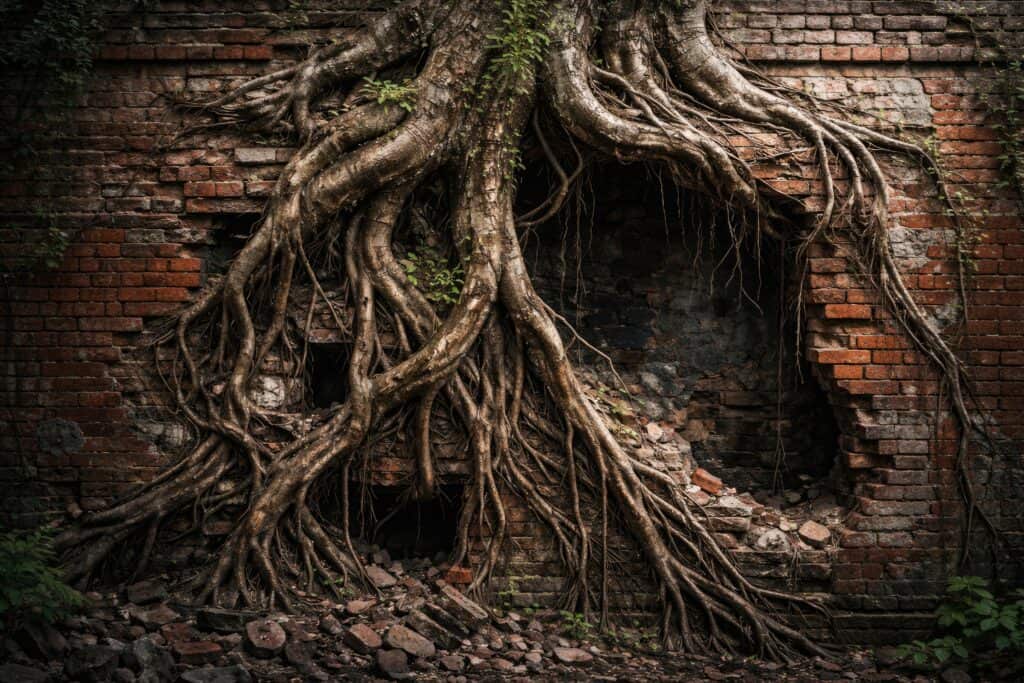
Understanding How Tree Roots Grow
Many homeowners worry when they notice large trees growing near their homes. It is easy to assume that tree roots are directly breaking through concrete and causing structural damage. In reality, the relationship between tree roots and foundation problems is usually more complicated. Roots naturally grow toward sources of water, oxygen, and nutrients. As a tree matures, its root system can spread far beyond the visible canopy. Some roots remain close to the surface, while others extend deeper into the ground depending on soil conditions. Understanding how roots behave is the first step toward recognizing why they can sometimes contribute to foundation concerns and what homeowners can do to reduce potential risks.
Disquieting Foundation Cracks: The Ruinous Secrets Of Tree Roots
Tree roots constantly search for moisture because water is essential for growth and survival. During dry periods, roots may extend farther from the trunk to reach available water sources. This growth pattern often brings roots closer to foundations, underground utilities, and other structures. However, roots do not typically break through healthy concrete simply because they are growing. Instead, they tend to follow paths of least resistance and take advantage of existing gaps, cracks, or areas where moisture is present. The more significant issue is how roots influence the moisture levels in the soil surrounding a home, which can affect foundation stability over time.
The Connection Between Tree Roots and Soil Moisture
The soil beneath and around a home provides support for the foundation. When soil conditions change, the foundation may also be affected. Tree roots play a role in these changes because they absorb large amounts of water from the ground. In many regions of the United States, especially areas with clay-rich soils, moisture fluctuations can cause significant movement in the soil. As roots remove water, the soil may shrink. When rain returns, the soil may expand again. These repeated cycles of shrinking and swelling can place stress on a home’s foundation and contribute to structural movement.
How Soil Movement Occurs
Not all soils react to moisture changes in the same way. Sandy soils generally drain quickly and experience less expansion and contraction. Clay soils behave differently because they absorb water and swell when wet, then shrink as they dry. When tree roots draw moisture from clay soil near a foundation, the drying process can become uneven. One section of soil may shrink more than another, creating inconsistent support beneath the structure. This uneven movement can gradually affect the foundation and may eventually contribute to visible damage. The process is often slow and may develop over several years rather than appearing suddenly.
How Shifting Soil Can Lead To A Cracked Foundation
A cracked foundation is often the result of movement rather than direct root pressure. When soil beneath a home shifts unevenly, portions of the foundation can settle at different rates. This condition is known as differential settlement. Even small changes in soil support can place stress on concrete, masonry, and structural components. As pressure builds, cracks may begin to form in foundation walls, slabs, or other areas of the home. While tree roots are frequently blamed for these problems, the underlying issue is usually the effect that roots have on soil moisture and stability rather than the roots themselves breaking concrete apart.
Direct Root Pressure Versus Indirect Damage
There is a common misconception that roots regularly smash through foundations. In most situations, this is not what happens. Healthy foundations are generally strong enough to resist normal root growth. Instead, roots contribute indirectly by changing the moisture balance in surrounding soil. In some cases, roots may expand existing cracks or exploit weaknesses that are already present. However, the majority of foundation concerns associated with trees are linked to soil movement rather than direct physical force. Understanding this distinction helps homeowners focus on the real causes of damage and the most effective prevention strategies.
Warning Signs Homeowners Should Watch For
Foundation problems often develop gradually, making early detection important. Homeowners should pay attention to changes both inside and outside the home. While these signs do not automatically mean that tree roots are responsible, they can indicate that soil movement or foundation settlement is occurring. Monitoring conditions over time can help determine whether further evaluation is needed and whether nearby trees may be contributing to the issue.
- New cracks appearing in foundation walls or slabs
- Interior wall cracks near doors and windows
- Doors or windows that become difficult to open or close
- Uneven or sloping floors
- Gaps forming around window frames or exterior trim
- Soil pulling away from the foundation during dry weather
- Large mature trees located close to the home
Looking Beyond The Symptoms
These warning signs can result from many factors, including drainage problems, poor soil conditions, construction issues, and seasonal weather changes. Because multiple causes may produce similar symptoms, homeowners should avoid assuming that nearby trees are automatically responsible. A careful assessment of the entire property is often necessary to identify the true source of the problem. Taking a broad view can prevent unnecessary tree removal and help ensure that any repairs address the underlying issue rather than only the visible symptoms.
Landscape Planning And Foundation Protection
Thoughtful landscape design can help reduce the likelihood of future foundation concerns. Trees provide shade, beauty, and environmental benefits, but placement matters. When planning a new landscape, homeowners should consider the mature size of a tree rather than its current appearance. A small sapling can eventually develop a root system that extends a considerable distance across the property. Choosing appropriate species and maintaining reasonable distances from structures can help minimize moisture-related soil movement and reduce long-term risks.
Choosing The Right Location
The ideal planting distance varies depending on tree species, soil conditions, and foundation type. Fast-growing trees with high water demands generally require more space than smaller ornamental varieties. Consulting local landscaping professionals or arborists can provide guidance based on regional conditions. Proper spacing allows roots to develop naturally while reducing the chance that they will significantly influence soil moisture near the foundation. Planning is often far easier and less expensive than addressing foundation problems after they develop.
Considering Long-Term Growth
Landscape decisions should account for how a property will look years into the future. Homeowners sometimes plant trees close to the house for immediate shade or appearance without considering their mature size. As trees grow, their water requirements increase, and their root systems expand. Evaluating long-term growth patterns helps create a balanced landscape that supports both healthy trees and a stable foundation. This approach protects property value while preserving the benefits that trees provide.
Prevention Strategies For Homeowners
Preventing foundation problems often involves managing soil moisture and maintaining healthy property conditions. Consistent watering practices can help reduce dramatic soil shrinkage during dry periods, especially in regions with expansive clay soils. Proper drainage is equally important because excessive water can also cause soil movement. Gutters, downspouts, and grading should direct water away from the foundation to avoid creating additional stress on the supporting soil. Regular inspections allow homeowners to identify small concerns before they become major structural issues.
Monitoring Trees And Soil Conditions
Trees do not necessarily need to be removed simply because they are located near a home. In many cases, proper maintenance can reduce potential concerns. Homeowners should monitor large trees for signs of stress, excessive growth near structures, or changes in soil conditions around the foundation. Consulting an arborist before cutting roots or removing trees is important because improper actions can damage the tree and sometimes worsen soil movement. Careful management often provides a better solution than drastic measures.
When Professional Foundation Repair May Be Necessary
Some foundation issues can be managed through preventive maintenance, but others require professional evaluation. If cracks continue to grow, doors and windows become increasingly difficult to operate, or noticeable settlement occurs, it may be time to seek expert assistance. Foundation specialists can inspect the structure, assess soil conditions, and determine whether repairs are necessary. They can also help identify whether tree roots, drainage issues, or other factors are contributing to the problem. Accurate diagnosis is essential because effective foundation repair depends on addressing the actual cause of movement.
What A Professional Assessment Can Provide
A professional inspection typically examines foundation cracks, elevation changes, drainage patterns, and surrounding landscape conditions. The goal is to understand how the structure is performing and what factors may be affecting stability. In some situations, repairs may involve stabilizing the foundation, improving drainage, or managing soil moisture levels. Recommendations vary depending on the property’s unique conditions. Receiving a thorough evaluation allows homeowners to make informed decisions and prioritize repairs that will provide lasting benefits.
Conclusion
Tree roots can certainly be associated with foundation problems, but the connection is often indirect. Rather than breaking through solid concrete, roots usually affect the moisture content of the surrounding soil. When soil shrinks, expands, or shifts unevenly, a cracked foundation may develop over time. Understanding how roots grow, monitoring warning signs, planning a thoughtful landscape, and maintaining consistent soil conditions can help homeowners reduce risks. When concerns become significant, professional foundation repair services can provide a clear assessment and appropriate solutions. By taking a proactive approach, homeowners can protect both their trees and the long-term stability of their homes. If you are thinking of stabilizing your home’s foundation reach out to Atlantic Foundation for a free homeowner’s consultation.
FAQ
1. Can tree roots break directly through a healthy foundation? Rarely. Roots typically cause indirect damage by absorbing moisture from clay-rich soil, leading to uneven shrinking, swelling, and differential settlement beneath your home.
2. What warning signs suggest tree roots are affecting my foundation? Watch for new wall or slab cracks, sticking doors or windows, sloping floors, and soil pulling away from your foundation near mature trees.
3. Do trees near my home need to be removed to protect the foundation? Not necessarily. Consistent watering, proper drainage, and thoughtful landscape planning help stabilize soil moisture
Sources
-https://www.bgs.ac.uk/geology-projects/shallow-geohazards/clay-shrink-swell/
-https://www.rhs.org.uk/plants/types/trees/near-buildings
-https://www.jlconline.com/how-to/foundations/tree-roots-and-foundation-cracks_o
-https://dfxrepair.com/tree-roots-landscaping-foundation-damage/
-https://engineerfix.com/can-tree-roots-damage-foundations/
-https://www.olshanfoundation.com/foundation-repair/foundation-problems/foundation-settling/