Helical Piers for New Construction in Raleigh & Eastern NC
Helical piers for new construction may provide engineered foundation support where soil conditions or structural loads make conventional shallow foundations unsuitable.
Atlantic Foundation & Crawl Space Repair works on new-construction foundation support projects in Raleigh and Eastern North Carolina using the Stabilizor® helical pier system. Pier suitability, placement, and installation requirements depend on the site’s soil conditions and the project’s structural design.
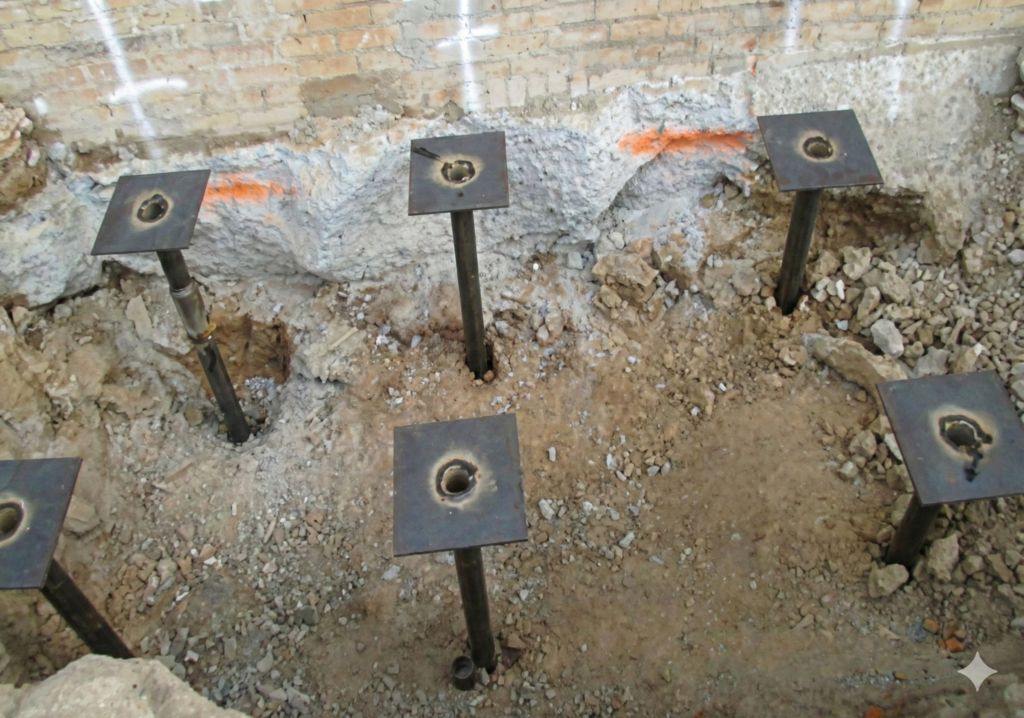
When Helical Piers Are Considered for New Construction
Helical piers may be considered when near-surface soils are weak, inconsistent, expansive, or otherwise unsuitable for the planned foundation loads. The decision should be based on site and soil conditions, structural loads, and the foundation design—not simply on the presence of one soil type.
Related new-construction guides: foundation cracks in new construction, new-construction foundation problems, and helical pier installation.
How the New Construction Pier Process Works
The process begins before the foundation is poured. Pier locations, lengths, and installation requirements are coordinated with the project conditions and load requirements.
- Site Assessment and Pier Placement
Site and soil information, foundation layout, and structural loads are reviewed to determine where piers may be required and the installation criteria for the project.
- Helical Pier Installation
Helical piers are installed at planned locations and advanced into the ground according to the project’s approved installation requirements. Pier depth, alignment, and installation measurements are checked against the applicable design criteria.
- Capping and Foundation Pouring
After installation, the pier connections are integrated with the footing or foundation system according to the project design before concrete placement is completed.
- Load Transfer for Long-Term Stability
The completed foundation can transfer designed structural loads through the piers into supporting soil. Pier capacity and installation acceptance must be evaluated against the project’s engineering requirements; no foundation system eliminates every possibility of future movement.
Site Conditions That Can Lead to a Helical-Pier Recommendation
Helical piers are not automatically required for every new build. They are considered when the site, soil, foundation design, or inspection findings indicate that additional deep support is appropriate.
Unstable or Poor Soil Conditions
Weak, loose, organic, or poorly compacted near-surface soils may not provide adequate support for the planned foundation loads.
Expansive Soil or Mixed Soil Types
Mixed or expansive soil conditions can create variable support and may justify a deeper foundation-support strategy depending on the project.
Unsuitable Soil Found During Foundation Work
If excavation or inspection identifies unsuitable support conditions, the project team may consider helical piers or another engineered foundation solution.
Request a Project Consultation
Share the project location, foundation type, and any available soil or structural information so the team can review whether helical support may be appropriate.
Are you buying or selling a home? Do you have humidity or foundation concerns?
Atlantic Foundation & Crawlspace Repair provides comprehensive crawlspace and foundation inspections. A $400 retainer is required for the estimate, which is fully deducted from your final invoice once the proposal is accepted.
What Determines the Helical-Pier Design
The pier design should follow the conditions and requirements of the project. Soil information, structural loads, foundation layout, access, and installation criteria all affect the final pier plan.
Foundation Loads
Pier spacing and support requirements depend on the loads that must be transferred through the foundation.
Soil Conditions
The depth and consistency of competent soil influence pier length and installation requirements. Helical support can reduce settlement risk but cannot eliminate every possible source of future movement.
Construction Sequence
Pier installation is coordinated with excavation, footing preparation, reinforcement, and concrete placement so the support system integrates with the foundation.
Engineering & Project Coordination
Builders, engineers, inspectors, and the pier installer may need to coordinate details so the foundation-support plan matches the project requirements.
Are Helical Piers Right for Every New Construction Project?
No. Helical piers are not required for every new building. Their suitability depends on soil conditions, foundation loads, structural design, access, and project requirements. The right foundation-support method should be selected through appropriate site and engineering evaluation.
When Helical Piers May Be Appropriate
Helical piers may be considered where shallow soils cannot provide adequate support, where deeper load-bearing conditions are needed, or where the engineered foundation design calls for specialized support.
When Conventional Foundations May Be Suitable
Where site conditions and structural requirements permit, conventional shallow foundations may provide adequate support without helical piers. A new construction foundation design should account for the actual soil and structural loads.
Why Engineering Review Matters
Pier size, spacing, depth, capacity, and connections must be determined according to the project design and applicable requirements. Installation acceptance must also follow the approved project specifications.
Frequently Asked Questions About Helical Piers for New Construction
What are helical piers used for in new construction?
Helical piers are deep foundation elements that can transfer structural loads to supporting soil at greater depths when required by the foundation design.
When are helical piers recommended for a new building?
They may be recommended when soil conditions, structural loads, or foundation design requirements make specialized support appropriate. Not every project requires helical piers.
Can helical piers support a new concrete foundation?
Yes. Some engineered helical pier systems can be integrated with concrete footings or grade beams using connections specified in the construction documents.
How is the required helical pier depth determined?
Installation requirements depend on soil conditions, required capacity, the selected pier system, and project engineering specifications. The actual installation must be checked against approved criteria.
Are helical piers suitable for every soil condition?
No. Suitability depends on site-specific geotechnical conditions, structural requirements, and the capabilities of the selected pier system.
Do new-construction helical piers require engineering coordination?
Yes. Pier placement, foundation loads, connections, and installation requirements should be coordinated with the applicable structural and geotechnical design documents.
Planning Helical Piers for a New Build
If weak or inconsistent soil is affecting a new construction project, call 919-855-0855 or request a consultation. The appropriate foundation-support solution depends on the site conditions, structural loads, and project design.