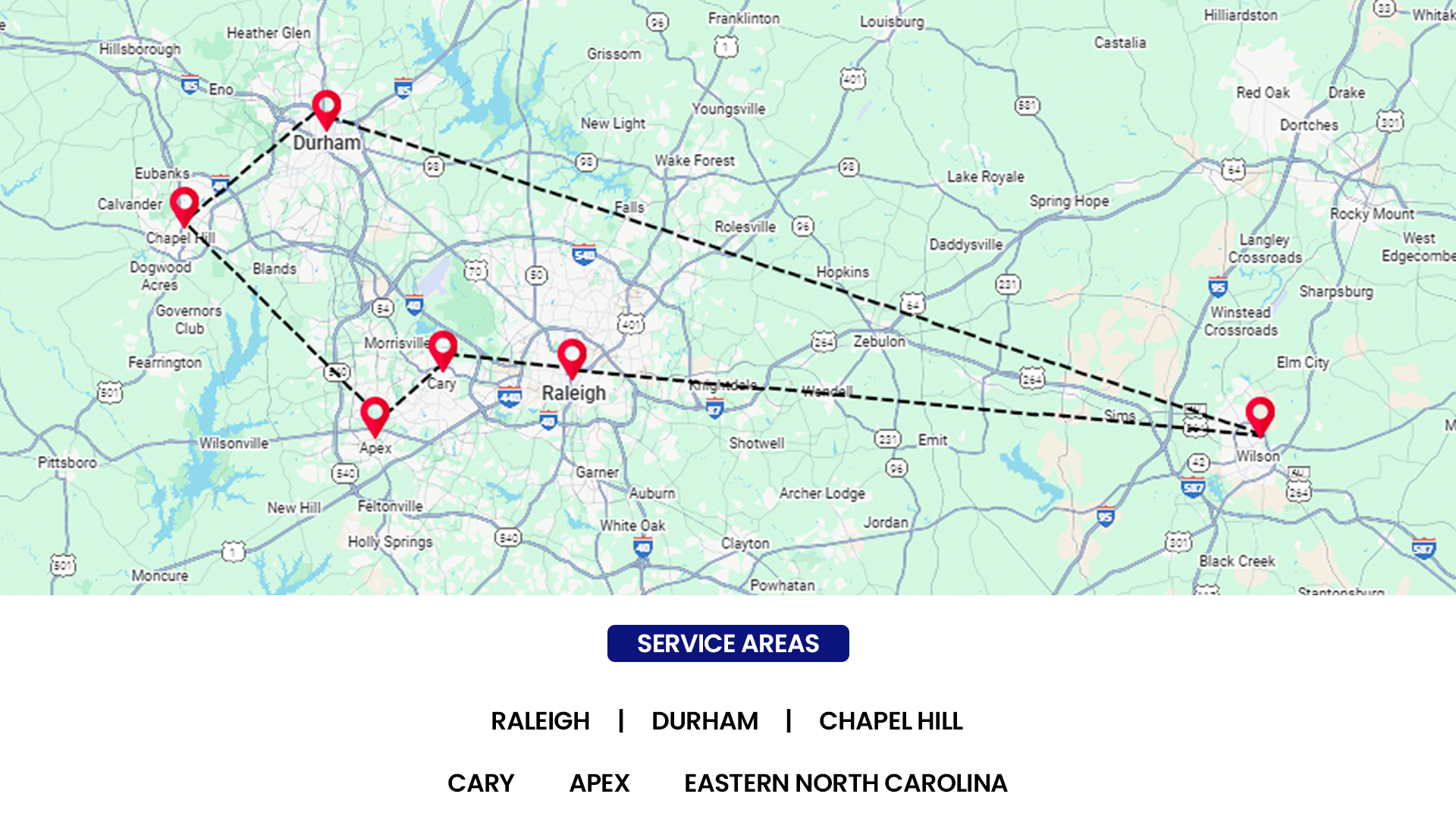
Masonry Repair Services in Raleigh, NC
Masonry repair in Raleigh, NC addresses cracked bricks, deteriorating mortar joints, shifting masonry, and other damage affecting brick and block walls. These problems may result from weather exposure, moisture intrusion, material deterioration, or foundation movement.
Atlantic Foundation & Crawl Space Repair evaluates masonry conditions to identify whether repointing, localized brick repair, or a structural repair approach is appropriate for the property.

Is the Masonry Damaged—or Is the Foundation Moving?
Cracked brick or deteriorated mortar does not always mean the same thing. Some problems are limited to the masonry, while recurring stair-step cracks, separation, or displaced brick can indicate movement in the supporting structure. The first step is to distinguish surface deterioration from underlying movement.
Related masonry guides: brick and stone maintenance and foundation warning signs that can appear in masonry.

Mortar Deterioration
Weathering and moisture can erode mortar joints without significant structural movement. Repointing may be appropriate when the surrounding masonry is stable.

Cracked or Damaged Brick
Localized brick damage may be repaired directly when the wall is otherwise stable and there is no evidence of continuing movement.

Stair-Step or Repeating Cracks
Recurring or stair-step cracking can be associated with movement below the masonry. The underlying foundation condition should be evaluated before cosmetic repair alone.

Separation or Displacement
Brick or block that has shifted, separated, or moved out of plane may require structural correction in addition to masonry repair.
When Repointing Is Appropriate
Repointing replaces deteriorated mortar in otherwise stable masonry. It is appropriate when the primary problem is mortar loss or weathering—not when active structural movement is continuing beneath the wall.

Stable Wall
The surrounding brick or block should be stable before deteriorated mortar is replaced.

Compatible Mortar
The replacement mortar should be compatible with the existing masonry so the repair does not introduce unnecessary stress.

Correct Joint Preparation
Loose and deteriorated mortar is removed to a suitable depth so the new mortar can bond properly.

Underlying Movement Ruled Out
If cracks are being caused by settlement or wall movement, that cause should be addressed before repointing is treated as the final repair.
Our Masonry Repair Process
The repair process starts with identifying whether the issue is mortar deterioration, damaged brick or block, veneer movement, or foundation-related cracking. The repair scope is then matched to the condition found.
Inspection & Damage Assessment
Our process begins as we identify cracks, loose mortar joints, and weakened bricks and then assess moisture penetration and structural concerns.
Removal of Damaged Mortar
Next, we carefully remove old, deteriorated mortar without damaging surrounding bricks, and then we prepare joints for strong mortar adhesion and long-lasting results.
Expert Repointing & Mortar Application
We use high-quality mortar that matches the original texture and color, then we repoint joints with precision and care for a seamless look.
Final Cleaning & Structural Finishing
After the repair work, the masonry joints and surrounding surfaces are reviewed for workmanship, finish, and visible concerns. The completed repair is checked against the agreed scope, while any separate structural or moisture-related issues are addressed according to the property's repair plan.
Why Cosmetic Repair Can Fail When the Wall Is Still Moving
Poor Cosmetic Appearance
Inconsistent mortar texture and color can make repairs look unprofessional.
Weak Reinforcement
Incorrect mortar application can weaken the wall rather than reinforce it.
Improperly Sealed Joints
Improperly sealed joints allow water infiltration, which can lead to further damage over time.
Request an Evaluation
Tell us where the masonry is cracked, loose, or separating so the team can review whether the issue is local masonry deterioration or related structural movement.

Advanced Solutions for Masonry Cracks and Separation
In addition to repointing, we offer advanced masonry repair techniques to restore the strength and appearance of your brick and block walls.
Re-attaching Veneers
With stainless steel ties, we secure loose masonry veneers to prevent detachment and water damage.
Repairing Vertical Shear Cracks
If foundation movement has caused vertical cracking, we use reinforcement techniques to stabilize and restore masonry walls.
Frequently Asked Questions About Masonry Repair
What causes cracks in brick and masonry walls?
Cracks in brick and masonry walls can develop because of foundation movement, moisture exposure, temperature changes, deteriorating mortar, or movement in the supporting structure. The crack pattern and condition of the wall should be evaluated to identify the cause before selecting a repair method.
What is the difference between masonry repointing and structural repair?
Repointing involves removing deteriorated mortar from masonry joints and replacing it with suitable new mortar. Structural repair addresses movement, instability, or damage affecting the wall or its supporting structure. Repointing alone does not correct an underlying structural movement problem.
Are stair-step cracks in brick walls a sign of foundation movement?
Stair-step cracks can be associated with differential settlement or movement in the supporting structure, but they do not always indicate foundation failure. Their width, location, progression, and surrounding conditions should be assessed.
Can damaged mortar joints cause water intrusion?
Yes. Deteriorated or open mortar joints can allow water to enter masonry assemblies. Repair may involve repointing damaged joints and identifying other moisture-entry paths. Any underlying movement or drainage issue should also be considered.
When should I request a masonry repair evaluation?
Consider an evaluation if masonry cracks are widening, bricks are separating, mortar is deteriorating extensively, or the wall shows signs of displacement or recurring moisture problems. Atlantic Foundation & Crawl Space Repair can review the visible conditions and recommend appropriate next steps.
For masonry repair in Raleigh, call 919-855-0855 or request an evaluation. The recommended repair depends on whether the problem is mortar deterioration, damaged masonry, veneer movement, or an underlying structural issue.